

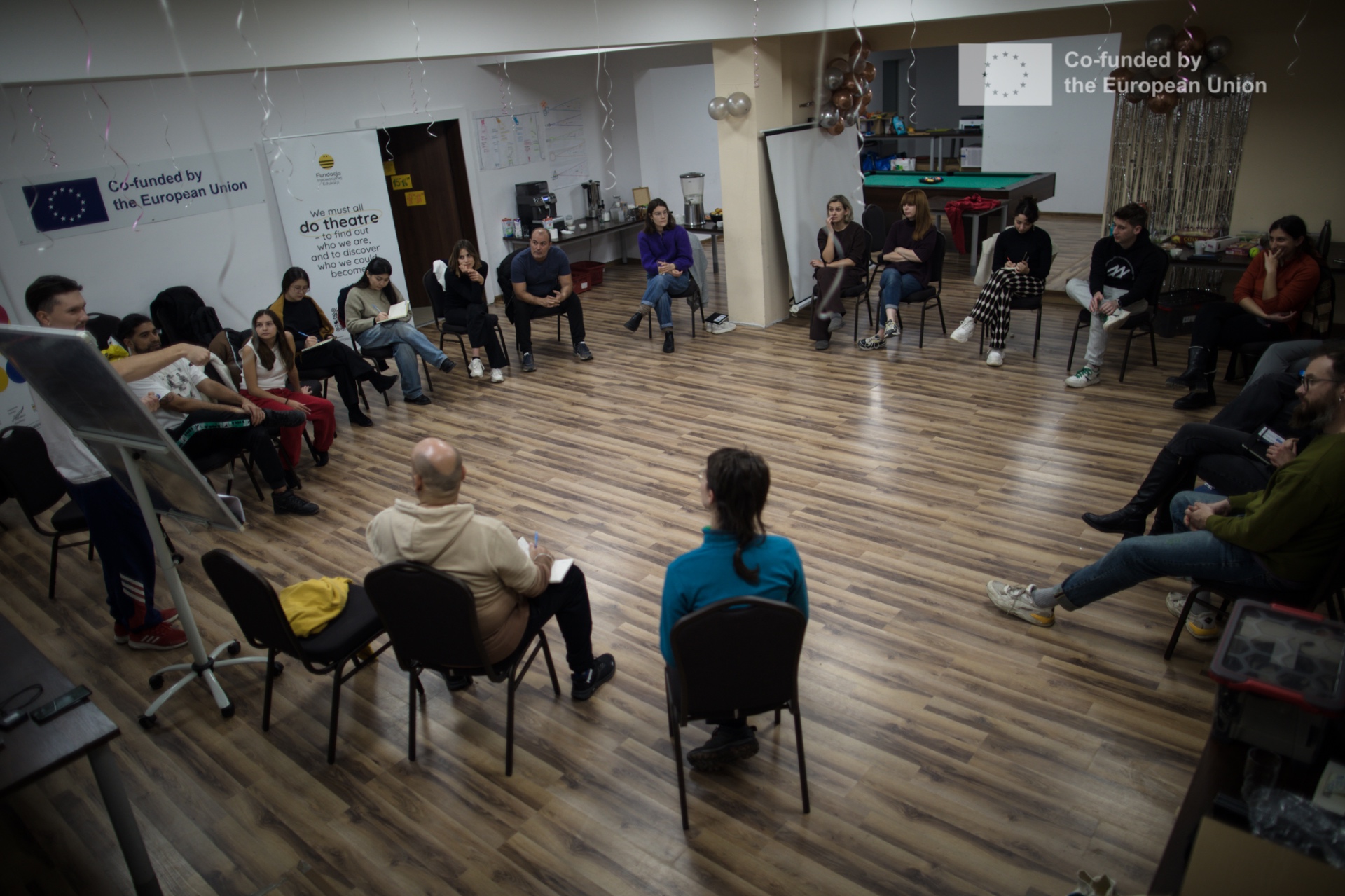
For those of you who already read my other article about the project “Breaking the Wall of Extremism,” you might already know that I am no expert in the theatre field. Nevertheless, this was about to be my second project in this area, so I started to feel a little more comfortable with myself and with the environment I knew I’d be facing. However, this time there was something different: it was about Black Light Theatre.
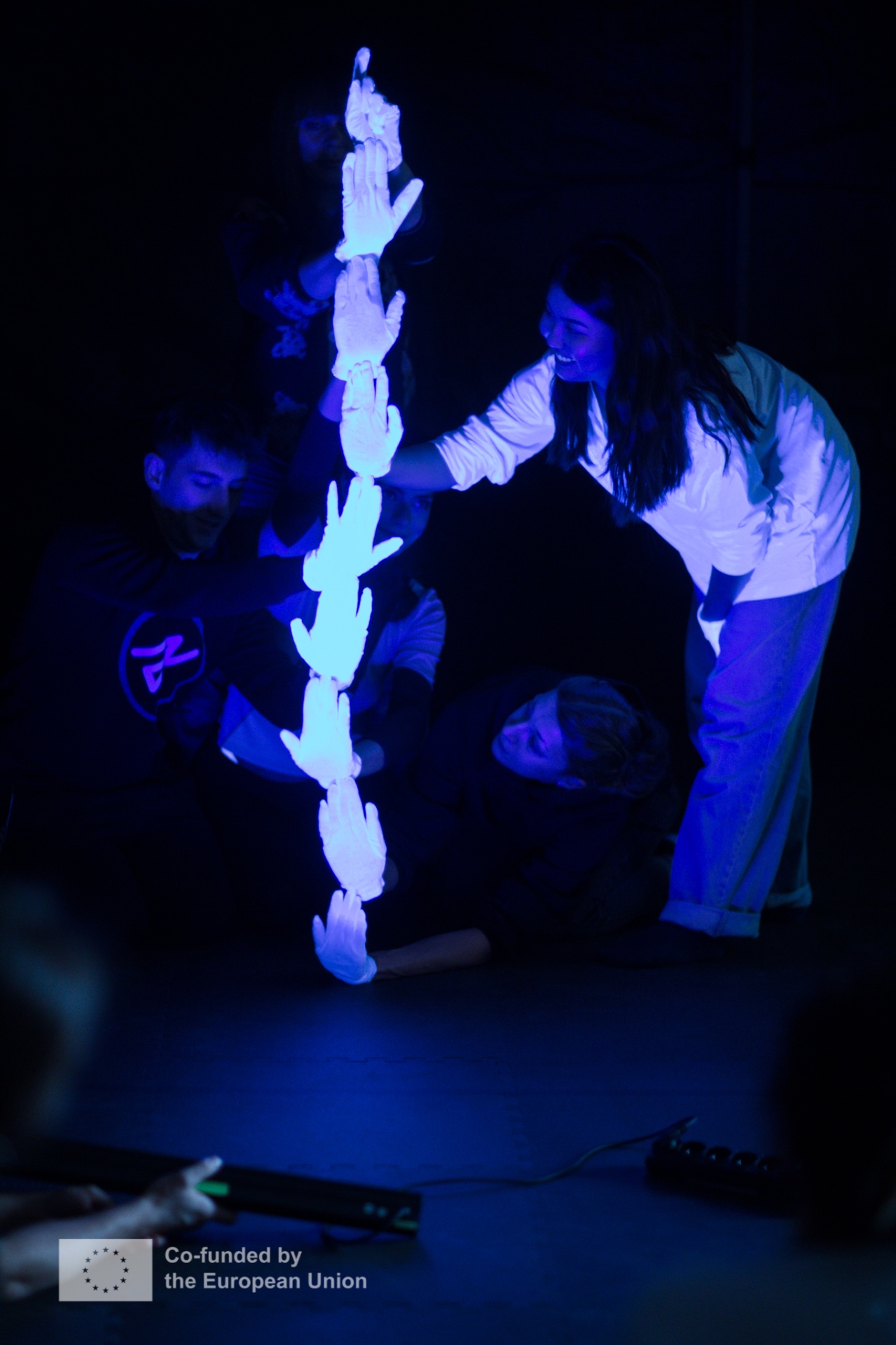
When I first heard of Black Light Theatre, I really didn’t know what to associate it with. I’d never heard of it before. I don’t even think there’s a proper translation in my mother tongue, Italian. So I started looking it up and gathering more information. I wanted to see it in practice, so I mostly looked for videos of performances using this methodology, and honestly? It actually looked so good that I got interested pretty fast.
When this project was proposed by my NGO, I immediately expressed my interest in participating. Not only because I wanted to discover this new theatre methodology, but also because, as you may have already guessed from the title, the project was in Poland.
I had already spent a little time in Poland before, in the capital for a New Year’s party a few years back with some friends, and I loved every single moment of it. It was magical. The people were polite but at the same time not boring, they knew how to have fun. The streets were clean, and going around the city felt very safe. So I told myself that visiting another city that wasn’t the capital would be even better. Maybe even more authentic, you know?
Since this was my second time in Poland, I decided to learn some basic Polish. Even though it’s a very difficult language (seriously, I can’t write down how to spell the things I learned like “good morning,” “how are you,” or “goodbye”), at least I know how to pronounce them. And let me tell you, people smile at me when I say these phrases instead of immediately hitting them with an English “hello” or starting to order in English right away. There’s something people really appreciate when you make an effort to learn their local language. This was super helpful because in a little village, not everybody spoke English, so sometimes I had to make myself understood. Though this wasn’t very complicated because, as many people know, Italians are basically masters of communication. Even when we don’t speak your language, we always find a way to make you understand what we’re trying to say. Hand gestures are a universal language, right? So that wasn’t really a big deal for me.
Getting to this little city, Dobczyce, was easier than expected. I landed in Kraków, where the hosting organization set up a private bus that took us directly to the venue. It was nice to meet people from other participating countries and have some small talk before reaching the place where we’d be spending a week together, experimenting with theatre. You know, that classic “where are you from?” conversation that somehow never gets old on these trips.
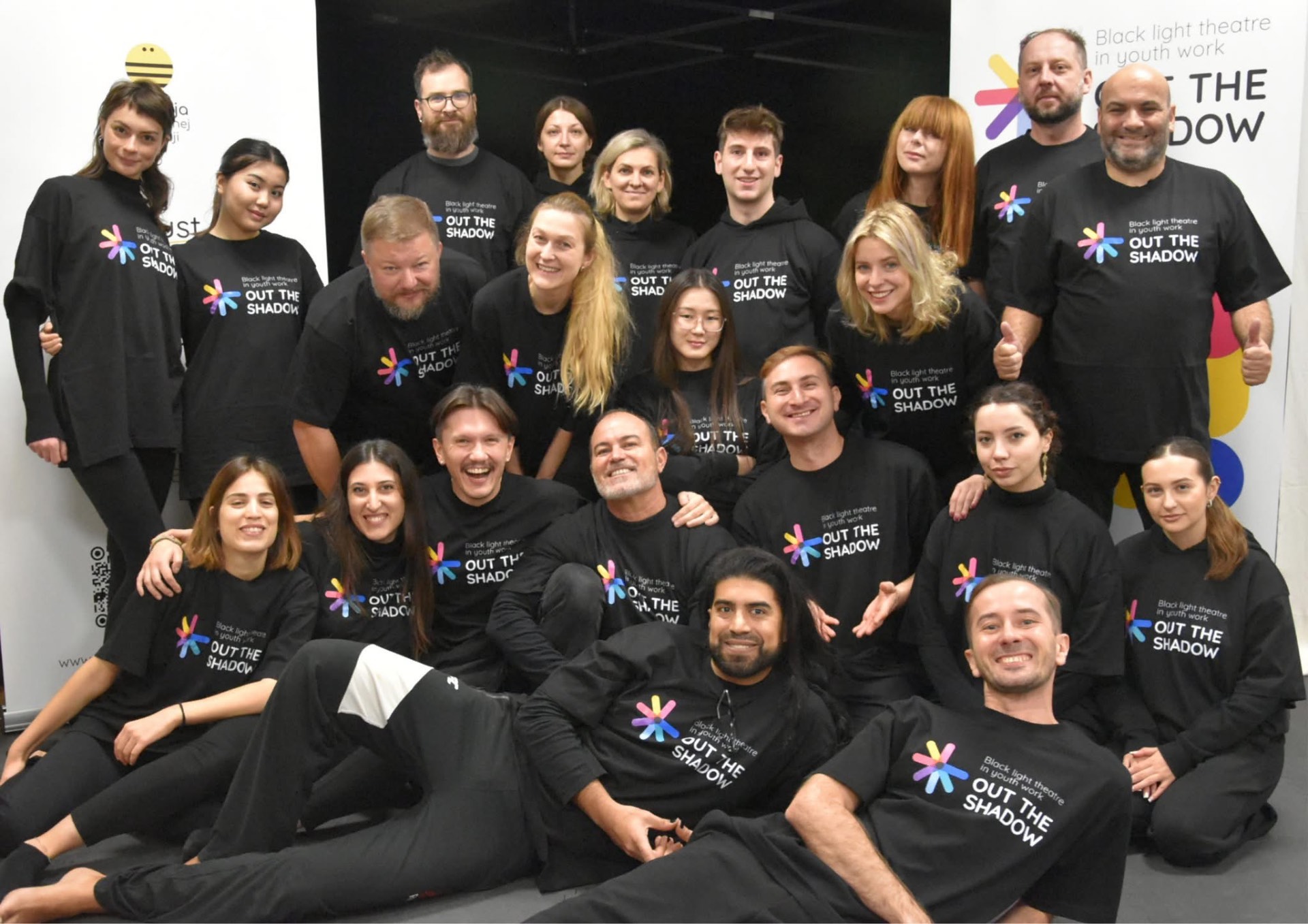
This experimentation was particularly insightful, thanks in part to the broad knowledge of the trainers. They were not only knowledgeable in the field of BLT (Black Light Theatre) but also in many other areas. Both of them are actual actors, so they really know what they’re doing. They were able to let us experiment a little with other methodologies as well. I remember we did some shadow theatre, and that was fun too. Basically, we got to play around with different techniques, which kept things interesting.
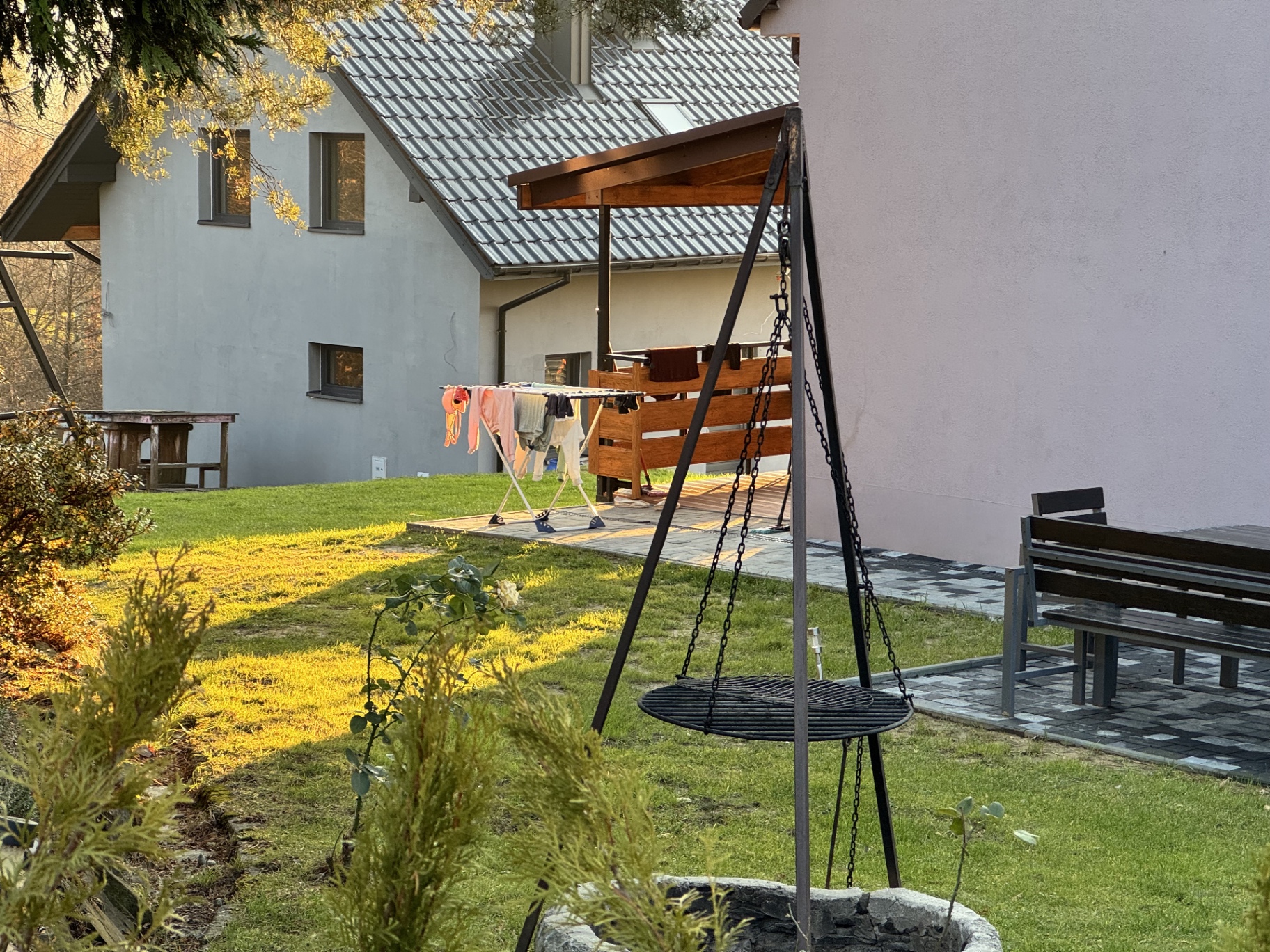
The hotel where we stayed was basically in the middle of nowhere, and I’m not saying this as a bad thing. I actually enjoyed it because it really allowed me, and I think many other people, to disconnect from that frantic city lifestyle. You know, the kind of lifestyle I lead when I’m back in Paris. Being in the middle of nature, surrounded by beautiful trees with no noises from ambulances or cars rushing through the city, was honestly something I appreciated a lot. It’s weird how sometimes doing absolutely nothing in the middle of nowhere can feel like doing everything, if that makes sense.
One point where opinions were a bit divided, at least for the Italian team, was the food. There were some people like me who really enjoyed what was being served (traditional Polish cuisine), and some others who disliked almost everything. They were complaining about pretty much every meal. Honestly though, during that project, I discovered a new love for beetroot soup, which was something I’d never tasted before.
I remember when they brought the bowl with this very red soup. I was sitting there wondering, “What is that and why is it SO red? Did they put food coloring in it or something?” Everybody was saying, “Oh, that’s beetroot soup. It’s very Polish. It’s very common to have this kind of dish when it’s cold outside.” I didn’t even know what beetroot was in English, so I had to look it up. When I saw the translation, I was like, “Wait, I’ve never eaten this before in my life!” And when I tried it? So. Good. Now, every time I go abroad, mostly to countries like Poland or other Nordic countries where they’re more used to this kind of food, I always try to get one because it’s honestly delicious. Who would’ve thought a red soup could change my life?
Going back to the project itself, we had one main goal from the start, which was to create a final performance. So all the things we were learning throughout the training days were building up to this big performance at the end. And the cool part? It was actually live-streamed on YouTube. You can watch it here if you’re curious: https://www.youtube.com/watch?v=06qwUUAAmX8
I’m really grateful for having been able to participate in this project. Since this is an ongoing thing with multiple mobilities expected to be hosted in the following years, I really hope to be able to participate in the next ones as well. Fingers crossed they accept me again, because I’m definitely ready for round two.
Subscribe to my Newsletter
Get notified when I publish new articles about technology, EU policy, and personal reflections. No spam, unsubscribe anytime.